
Substitution Consciousness: An Interview with Yameng Li
In an age where algorithms dictate what is seen, valued, and remembered, Yameng Li (Maya) turns her attention to what slips through the cracks.
Working across installation, experimental video, and curatorial practice, Li examines how technological systems quietly reshape human perception. Her work makes visible what she calls “substitution consciousness” — the unsettling awareness that identity, presence, and value can be reduced, replaced, or erased within algorithmic structures.
Blending 3D rendering with archival prints and field research, she creates a deliberate tension between the physical and the simulated. The result is work that feels at once precise and unstable — where clarity fractures, and something more disquieting emerges.
In this conversation, Li reflects on algorithmic blindness, mediated intimacy, and the fragile boundary between visibility and disappearance in the digital age.
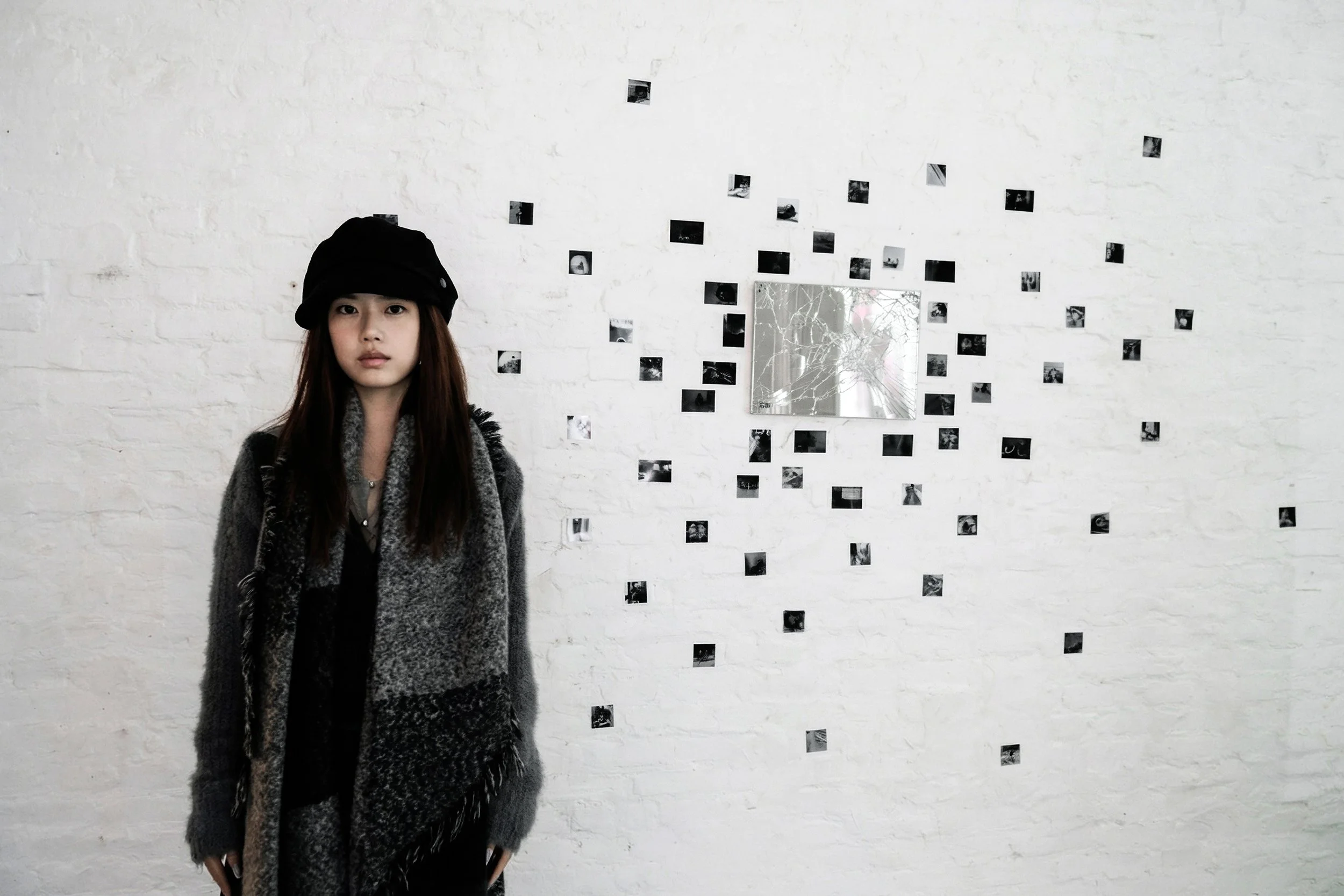
Yameng Li (Maya). Image courtesy of the artist.
SAH: On Origins and the Path to New Media
What first sparked your interest in art, and how did your background in the Business of Art and Design lead you toward working with installation and new media?
YL: It all began with a fascination—and a deep-seated skepticism—toward "logic." My background in the Business of Art and Design trained me to view the world through a rational, function-oriented lens.
However, when I began working with 3D rendering and motion graphics, I noticed a subtle "crack" that occurs whenever technology attempts to simulate reality. I became obsessed with this digital dissonance. To me, installation and new media are not just tools; they function as a microscope, magnifying the microscopic frictions of power and existence that remain invisible to the naked eye.
SAH: On Making Psychological Shifts Visible
When did you first realise that technology was reshaping not just our environments, but our perception — and that these psychological shifts needed to be made visible through your work?
YL: I first noticed these shifts during a period of field research. I realized that while modern urban surveillance systems can precisely capture every traffic violation, they are often "blind" to a disabled person struggling with a blocked tactile path or a stray cat hiding in the shadows. This "Algorithmic Blindness" revealed that technology isn't just reshaping our cities; it is quietly restructuring our consciousness.
When a life lacks "productivity" or a "data tag" within a system, its right to be seen is stripped away. I felt an urgent need to use art to make these filtered-out psychological states tangible and visceral.
SAH: On “Substitution Consciousness”
You’ve developed the concept of “substitution consciousness.” How did this idea emerge, and was there a specific moment or experience that defined it for you?
YL: This concept emerged from my reflections on the "placeholder." In digital creation, we use placeholders when the actual entity hasn't arrived or is no longer essential. I began to see that modern individuals exist in a state of "functional substitution."
We suffer from a dual-layered anxiety: the psychological fear of becoming redundant (losing our utility) and the spiritual dread of losing our uniqueness (the erosion of our essence).
This term was solidified while I watched AI morph human faces in real-time—the realization that when "truth" is no longer a requirement for presence, a profound crisis of identity begins.
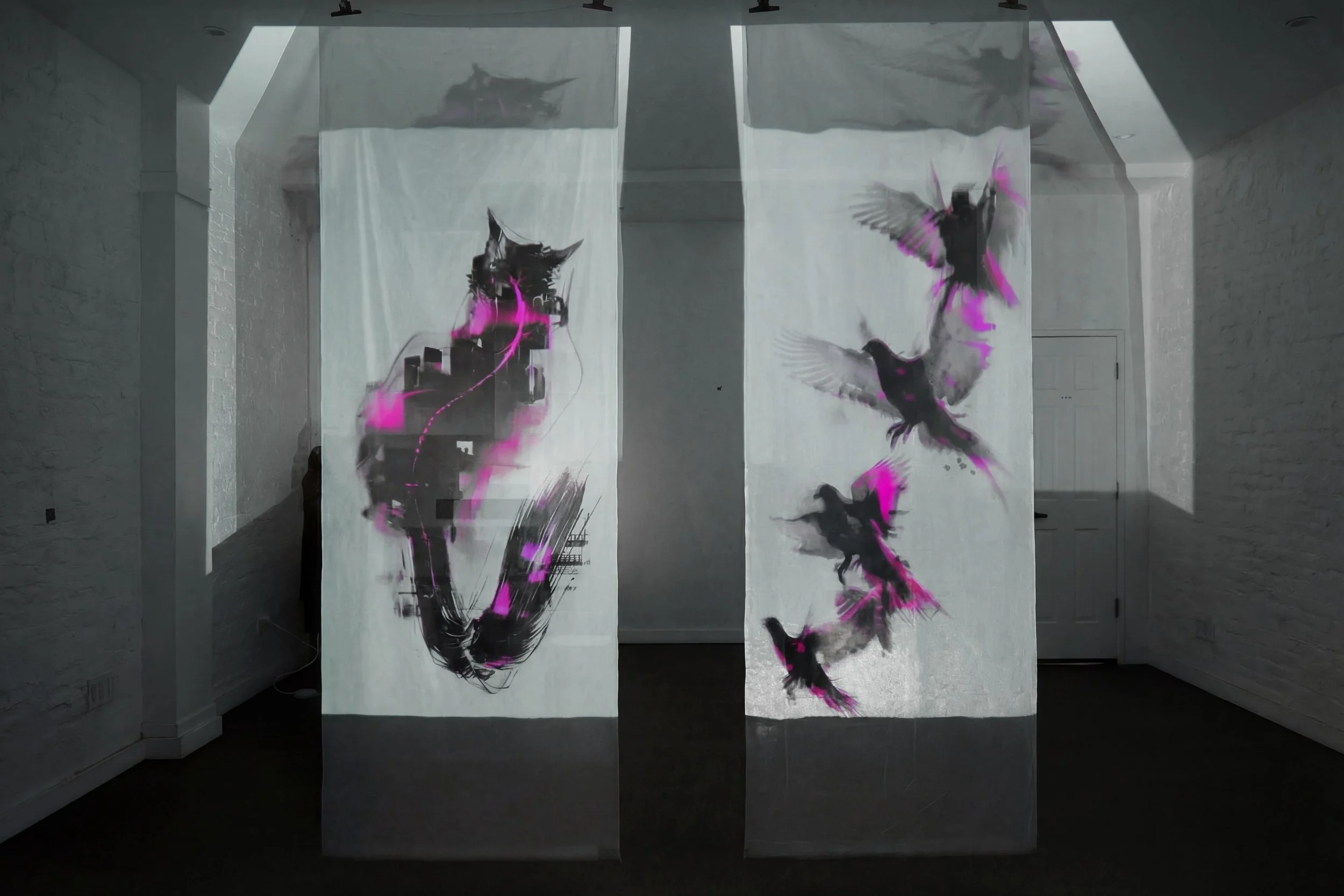
Schrödinger’s Stray. Physical research archive comprising archival pigment prints on varying substrates, site-specific mapping, and documented field notes. Dimensions: Variable (Approx. 200 × 300 cm installation area).
SAH: On Schrödinger’s Stray: Analogue vs. Digital Tension
Your work often combines physical materials like archival prints and field notes with digital concepts. What draws you to this tension between analogue evidence and digital instability?
YL: That tension is the core of my practice. Archival pigment prints and field notes represent "evidence"—they possess physical weight and an unalterable honesty.
In contrast, digital concepts are fluid and unstable. I deliberately create this collision: using traditional methods to document an ephemeral digital condition. It feels like mining for minerals within cloud data; I want to see how much "material residue" can resist the void of the digital world.
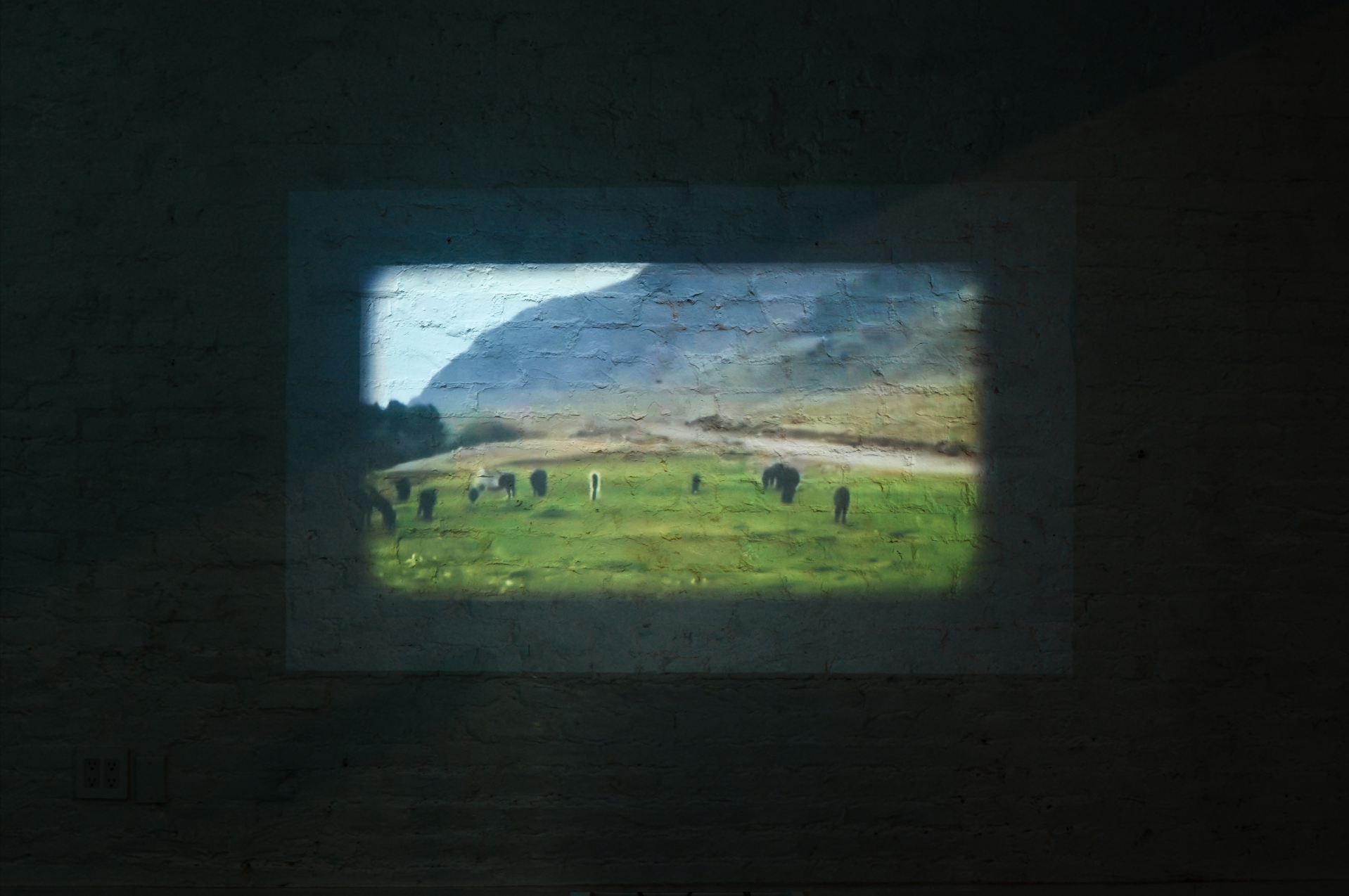
Margins of the City. A Loop Study. Single-channel 4K digital video, generative noise processing, spatialized mono-audio. Size: Screen-based or projection (Variable ).
SAH: On the Function of the “Loop”
In Margins of the City, the loop plays a central role. Do you see repetition as a form of entrapment, resistance, or something else entirely?
YL: In Margins of the City, the "loop" functions as both a trap and a form of "non-productive resistance." The logic of the city is linear and accelerated, demanding that every second yield value. Yet, the animals in my work exist in a state of constant repetition.
This repetition initially feels like an entrapment, but over time, it generates a strange sense of comfort. It questions the algorithmic hegemony: if a life simply exists in a cycle without a "progress bar," does it still hold meaning in the eyes of the system?
SAH: On Intimacy Disease and Digital Connection
Your Intimacy Disease series explores a kind of artificial closeness. What are you investigating about human connection in an age where intimacy is increasingly mediated through screens?
YL:I am investigating "mediated touch." we perceive intimacy through the smoothness of a screen—a connection filtered by algorithms that strip away physical warmth and friction. 3D rendering is a fascinating medium because it can achieve a kind of uncanny perfection.
This "artificial closeness" reflects the contemporary human dilemma: we are closer than ever, yet we feel separated by an impenetrable membrane of pixels.
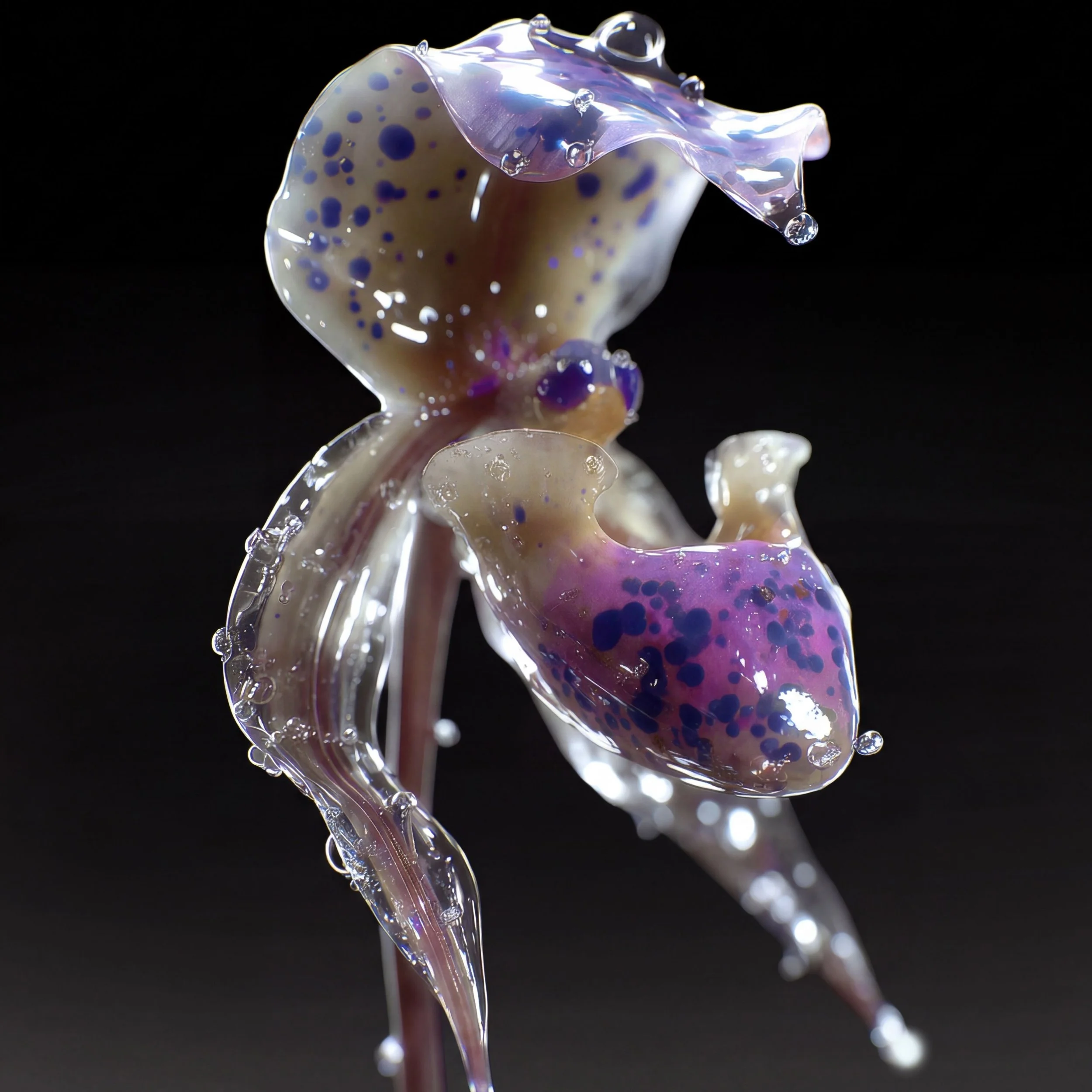
Disease Series_01 Medium Digital image, 3D rendering Variable dimensions.
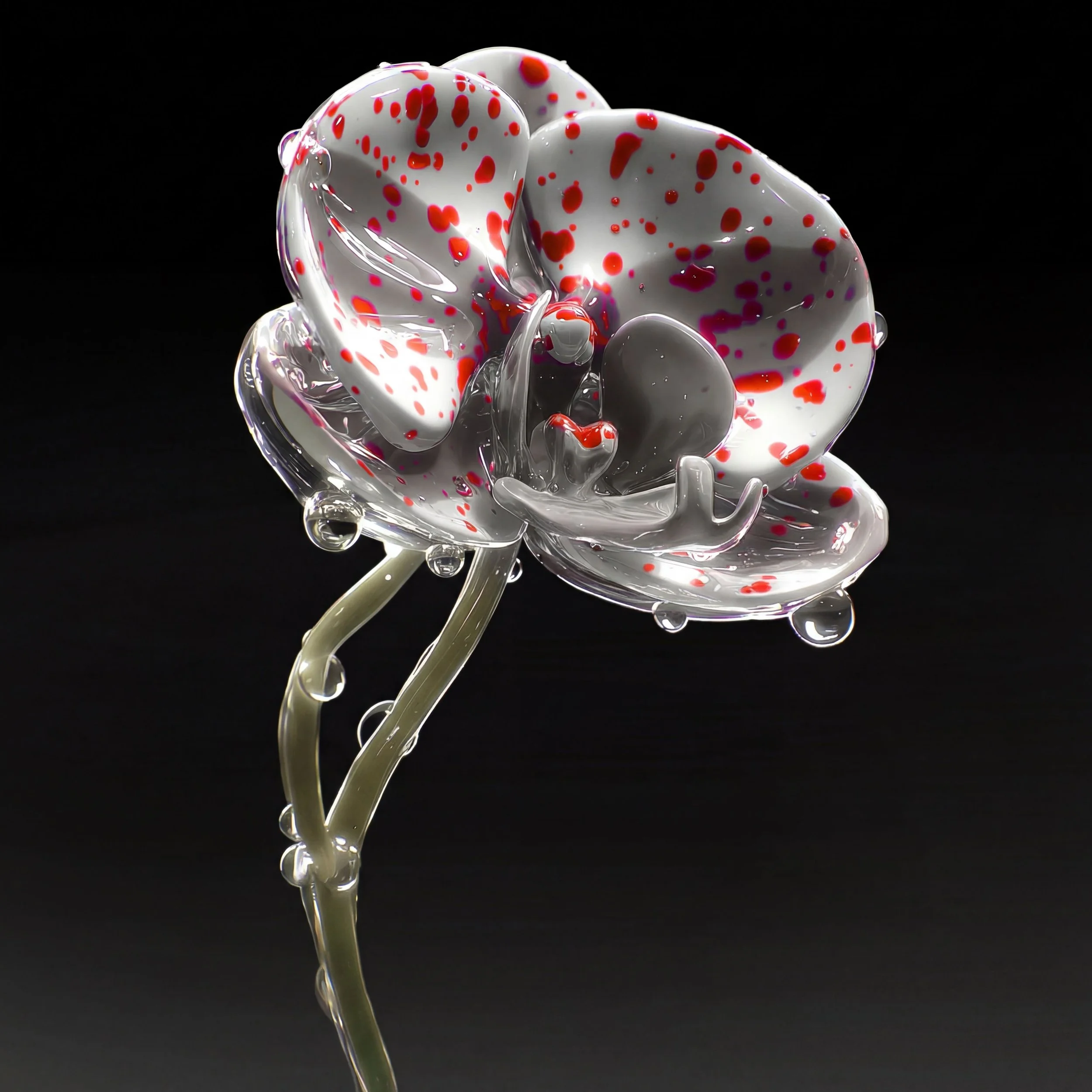
Disease Series_02 Medium Digital image, 3D rendering Variable dimensions
SAH: On Low-Evidence Survivors and Scale
“Low-Evidence Survivors” is a striking phrase. What does it refer to, and why was it important to present this work at such a large, physical scale?
YL: "Low-Evidence Survivors" refers to those individuals who leave no digital footprint and lack "evidence of existence" within social systems. I chose the commanding scale of 80 × 160 inches to exert a physical volume of pressure.
I want to force the viewer to confront lives that were intended to disappear into background noise. This displacement of scale is designed to amplify "structural neglect" until it becomes impossible to ignore.
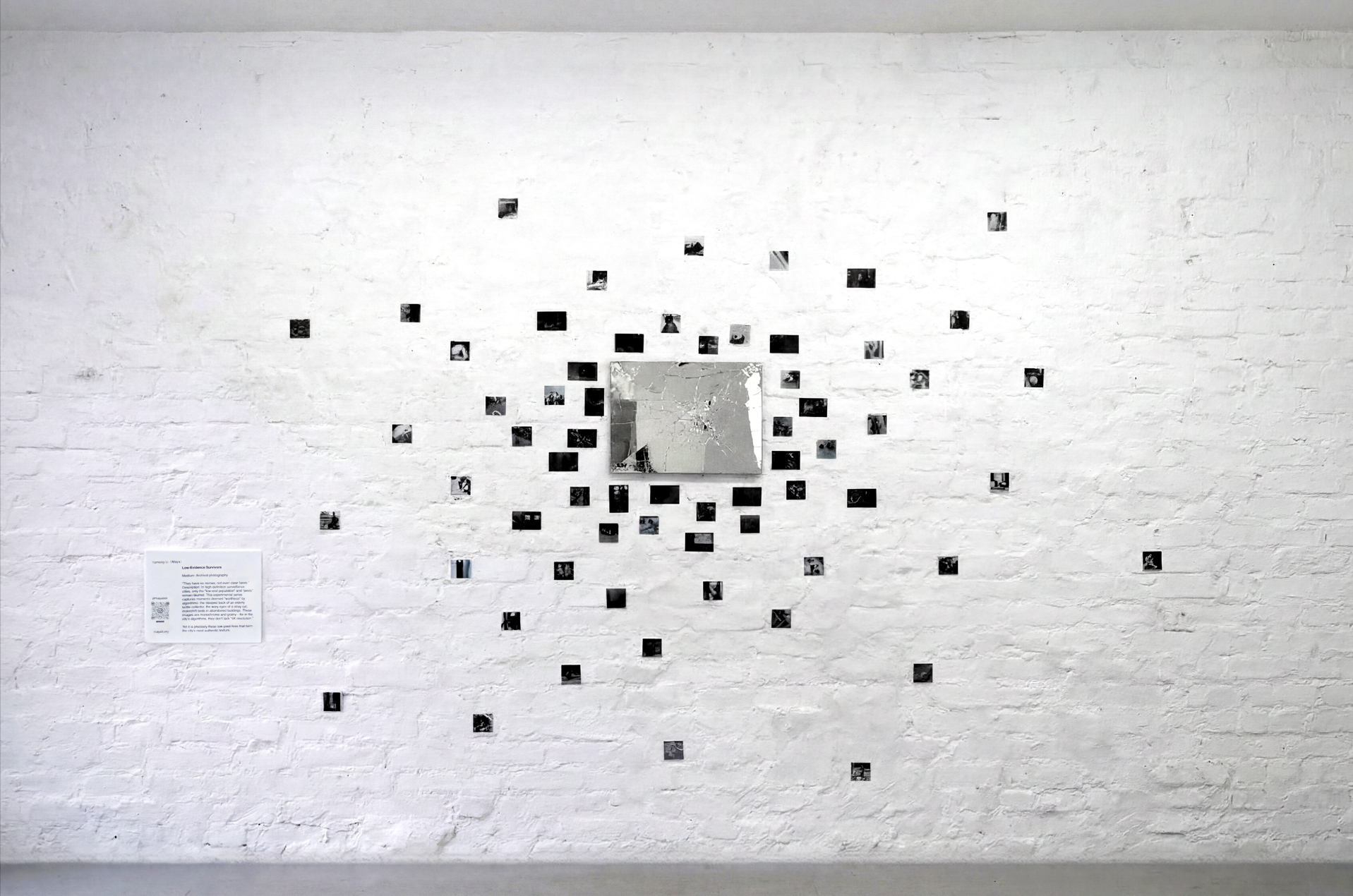
Low-Evidence Survivors. Physical research archive comprising archival pigment prints on varying substrates, site-specific mapping, and documented field notes. Size: 80 × 160 in (variable).
SAH: On “Substitution Aesthetics”
You describe your visual language as “substitution aesthetics.” How would you explain what that looks and feels like to someone encountering your installations for the first time?
YL: I would describe it as a "Weighted Lag." When you stand inside one of my installations, you see images struggling against unstable, semi-translucent gauze; light and shadow break within the folds of frames and curtains.
It feels as though your senses are trying to read a piece of data that has failed to load. It looks exquisite, but it feels fragmented and delayed—you are witnessing the very moment where the "real" is being replaced by the "simulation."
SAH: On the Dual Role of Artist and Curator
How does working as both an artist and a curator shape your practice? Does curating ever challenge or shift your own creative direction?
YL: Curating is my skeleton; it provides me with rigorous research methodologies and narrative structures. Art-making is my flesh; it allows for irrational, intuitive exploration.
Curating the work of others often acts as a sudden challenge to my visual comfort zone, forcing me to consider broader socio-political power dynamics. This shifting perspective ensures that my studio work is never just a personal expression, but an open-ended research project.
SAH: Advice for Emerging Practitioners
What advice would you give to emerging artists working with new media or conceptual practice, especially when the path forward feels undefined?
YL: Do not rush to master the latest technology. Instead, search for the moment of discomfort. The path of new media and conceptual art is rarely defined, but that is precisely its power—you can use the "glitch" of technology to define your own language.
Embrace the "blurred zones" that cannot be defined by algorithms, for that is where you will find your most irreplaceable value as a human artist.
